Is Your Auburn Garage Door Worth Fixing, or Time to Replace It
Most Auburn houses date to 1966-1980 with original hardware.
Read moreBlogAuburn, AL · 4 min read
Auburn's garage doors mostly date to 1966-1980, before insulation code existed. Here's what that means for your panel, your opener, and your energy bill today.
Local detail
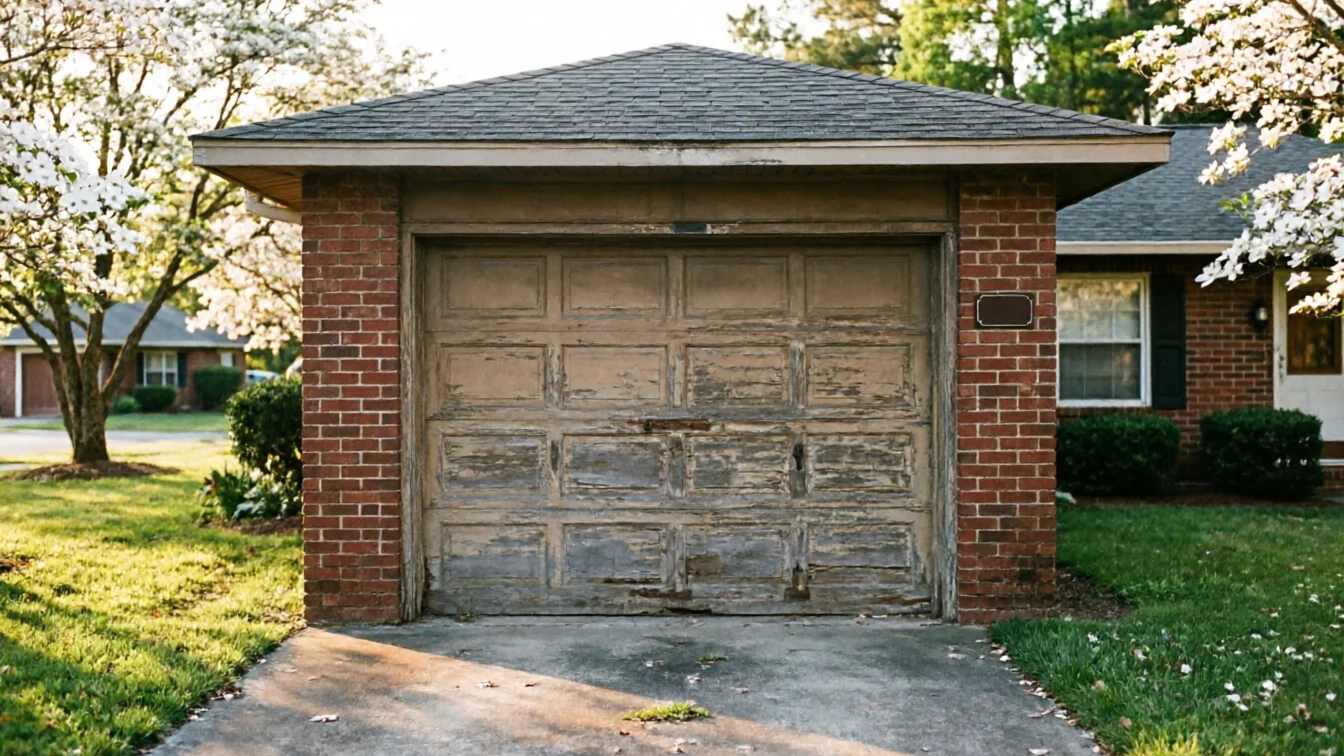
Start with the panel itself, not the opener. If your house went up between 1966 and 1980 - and most of the houses we work on did - the garage door that's original or close to original was built before any insulation requirement applied to residential garage doors. That means a single layer of steel or a wood panel with no foam core, no thermal break, and no vapor barrier behind it.
Run your hand along the inside of the door on a cool morning. If it's cold to the touch and there's no backing material visible, that's your answer. Check the bottom seal next - on doors this old, the original vinyl astragal has usually hardened and cracked, which lets more air through than the panel itself does. Look at the track and rollers too. A lot of these doors still run on the original galvanized track with steel rollers, which is fine mechanically but tells you nobody's touched the weatherstripping system since the house was built.
We're not saying every door from this era needs replacing. Plenty of them still open and close fine. But if you're chasing a cold garage or a spike in the utility bill, the panel is where to look first, not the opener.
The area
The mistake we see most is a homeowner swapping the opener - sometimes twice - to fix a problem that was never mechanical. A door that's cold, drafty, or noisy on a house from this era is usually telling you about the panel, not the motor. A new opener will lift a 50-year-old uninsulated steel door just fine. It won't make the garage warmer or quieter, because the thing letting the cold in is the door skin itself, not how it's driven.
The second version of this mistake is adding a foam insulation kit to a panel that was never designed to carry it. Original steel from this build era is often lighter gauge than what's used today, and a kit adds real weight across a door that's already flexing on old hinges and worn rollers. We've seen panels sag at the center stile within a year of a DIY kit going in. If the door is original to a house built in this window, the more honest fix is usually a panel swap, not a retrofit - and we'll tell a customer that even when the retrofit kit is the cheaper sell.
What we find
The service area runs heavy on houses built in the 1966 to 1980 range, with the median landing around 1975 - and that holds across the four main residential areas of town that filled in during those two decades. That's a narrow, consistent window, which means the garage door problems we run into aren't random. They cluster: same era of steel, same original hardware specs, same lack of insulation because the code simply didn't ask for it yet.
With 1,829 owner-occupied houses in the mix and a median household income of $42,705, a lot of these doors are original or one generation removed from original. That's not a complaint about the housing - it's just the reality of a town that grew in one steady wave rather than in scattered phases. It means parts matching matters here. A torsion spring or hinge pattern that was standard in 1975 isn't always what's sitting on a truck or shelf today, so sourcing the right-gauge hardware for a repair sometimes takes longer than it would on a newer door.
How we work
This part of Alabama sits in a mild band with occasional freezes, not the deep-freeze cycles that crack concrete or warp steel outright. But mild-with-some-freeze is its own kind of wear on a 50-year-old uninsulated door. The panel has no thermal break, so it swings in temperature right along with the outside air - cold enough on a winter morning to go brittle, then back to warm and humid within hours. That swing is what splits old vinyl weatherstripping and loosens glue joints on wood panels from this era faster than steady cold would.
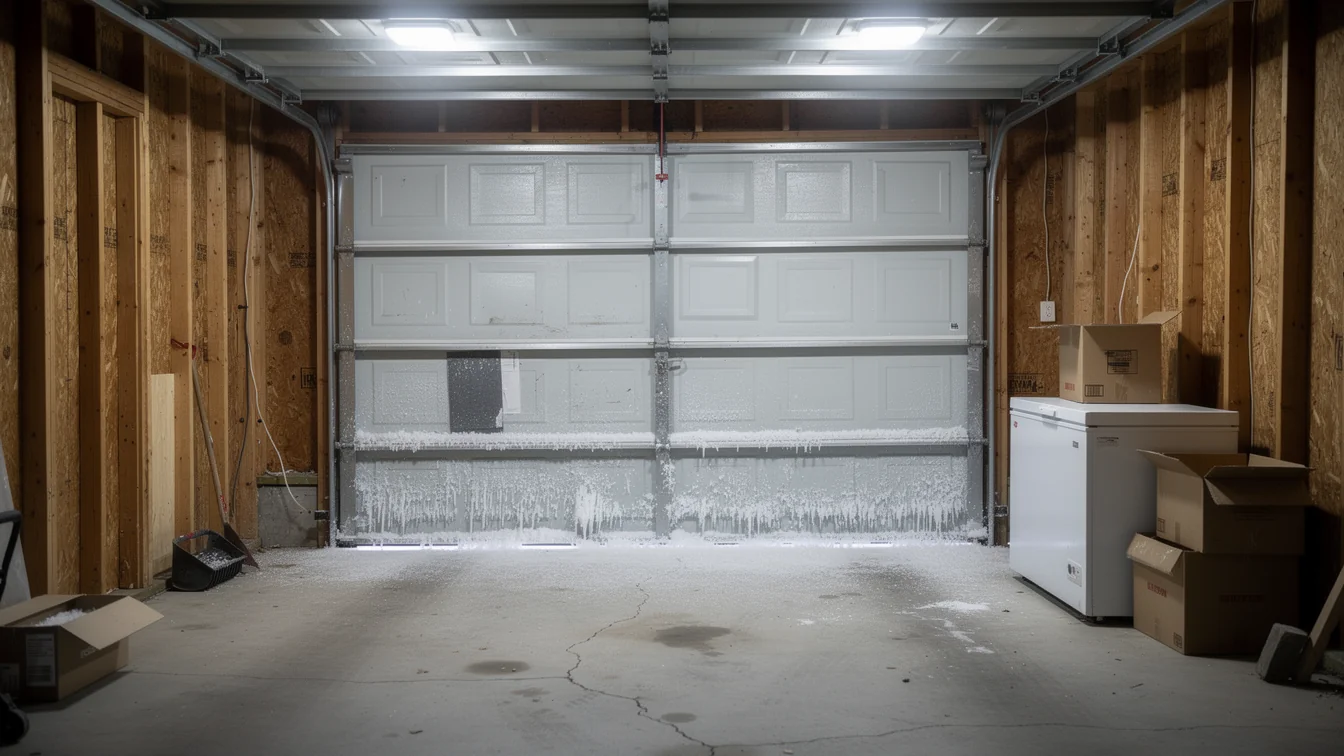
It also shows up as condensation. An uninsulated steel door in a garage that's even slightly heated or just holding ambient humidity will sweat on cold mornings, and over enough winters that moisture finds its way to the bottom corners and starts rust at the seams - exactly where these original doors are already thinnest. None of this is dramatic weather. It's just steady, mild cycling working on a door that was never built with a thermal layer to begin with, and over fifty-some years it adds up.
Questions
Depends on the panel's condition. If the steel is still straight and the seams are tight, an insulation kit can help - but on original steel from this era, the gauge is often too light to carry the added weight long-term. We check the panel condition first before recommending a kit over a replacement.
Houses in this area built in the 1966-1980 window typically have garage doors from the same period, built before insulation was required. No foam core, no thermal break - so the garage tracks outside temperature almost directly, especially during the freeze-thaw swings we get here.
Sometimes, but not always. If the original panel is thin-gauge steel or older wood, we'll tell you honestly when a kit risks sagging the door rather than fixing the cold, and recommend a panel swap instead.
Recommendation
More garage door guides for Auburn homeowners.
Most Auburn houses date to 1966-1980 with original hardware.
Read more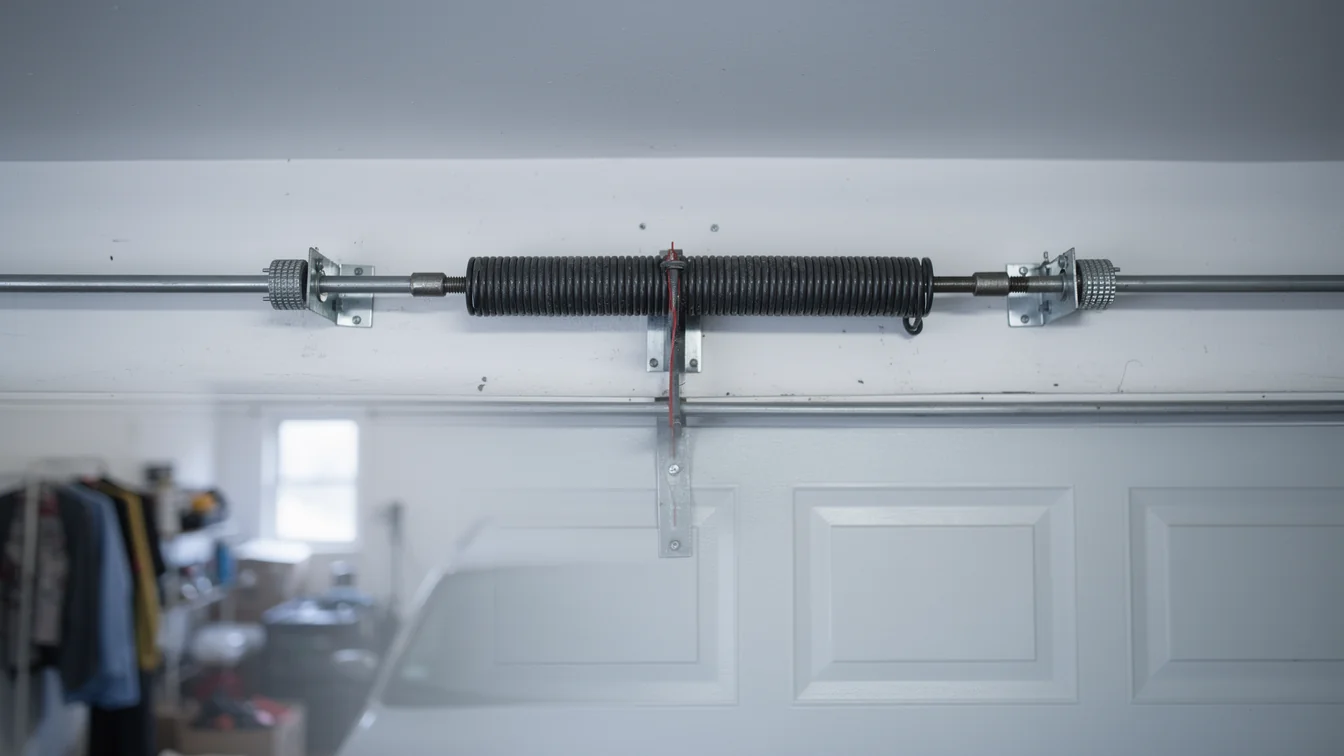
Most Auburn houses date to 1966-1980 with original torsion hardware.
Read more
Auburn homes built 1966-1980 often pair older openers with mild-climate wiring quirks.
Read moreReady when you are
Auburn Garage Door Pros repairs and installs garage doors, springs and openers in Auburn, AL and the surrounding area.